
7 Ways to Extend Early Learning at Home Every Day


Early learning at home does not need to be complicated, expensive, or separate from ordinary family life. For young children, the most powerful learning often happens in the middle of everyday moments: getting dressed, helping with kai, watering plants, reading a favourite book, or talking in the car.
The aim is not to turn your home into a classroom. It is to notice the small opportunities already woven through your day and use them to build language, confidence, curiosity, independence and connection.
In Aotearoa New Zealand, Te Whāriki, the early childhood curriculum, recognises that children learn through relationships, play, family and community. That makes home a rich learning environment, especially when children feel safe, heard and free to explore.
Why early learning at home should feel like life, not lessons
Many parents worry that they should be doing more: more activities, more letters, more numbers, more structured learning. But young children learn best when their experiences are meaningful. A child sorting socks, telling you about a worm in the garden, or negotiating a turn with a sibling is already developing important skills.
The adult’s role is to add warmth, language and gentle challenge. Instead of asking children to perform, we can wonder with them, describe what is happening, give them time to try, and celebrate effort.
This approach also supports the kind of play based learning children experience in quality early childhood settings. If you are curious about the professional side of this, Aubrey’s article on how qualified early childhood educators support learning through play explains how teachers make everyday play purposeful without taking over.
Everyday moment | Learning that may happen | Simple parent prompt |
Packing a bag | Memory, sequencing, independence | What do we need first? |
Cooking dinner | Maths, language, fine motor skills | Can you count three carrots? |
Walking outside | Observation, science, vocabulary | What has changed since yesterday? |
Tidying toys | Sorting, responsibility, problem solving | Where could these blocks live? |
Reading together | Listening, imagination, early literacy | What do you think happens next? |
1. Turn routines into rich conversations
One of the easiest ways to extend early learning at home is to talk through everyday routines. Children build vocabulary and understanding when adults describe actions, feelings, objects and choices.
During breakfast, you might say, “The toast is crunchy. The banana is soft. Which texture do you like best?” While getting dressed, you can name colours, body parts, positions and weather: “Your gumboots go on your feet because the grass is wet today.”
Conversation does not need to be constant. What matters is that it is responsive. When your child points, gestures, babbles, asks questions, or brings you something, respond as if their communication is important. The Harvard Center on the Developing Child describes this back and forth interaction as serve and return, a key part of healthy brain development.
If your child says only one word, gently expand it. If they say “truck”, you might say, “Yes, a big red truck is going past.” If they say “more”, you might reply, “You would like more apple. I can see you are still hungry.”
2. Offer simple play invitations, not complicated activities
Children do not need perfect craft setups or new toys every week. A simple play invitation gives them something interesting to explore while leaving room for imagination.
Try placing a few familiar materials together and letting your child decide what to do with them. For example, a basket of shells, a muffin tray and tongs can become sorting, counting, pretend cooking, storytelling, or sensory play.
Good play invitations are usually open ended. They do not have one correct result. They invite children to test, repeat, combine, imagine and problem solve.
Simple ideas include:
Blocks with small fabric pieces for building homes, farms or roads
Water, cups and spoons outside for pouring and measuring
Recycled boxes for making shops, cars, robots or animal houses
Play dough with leaves, stones or shells for texture and storytelling
The key is to observe before stepping in. If your child is deeply focused, let the learning unfold. If they seem stuck, ask a gentle question such as, “I wonder what would happen if we tried this piece over here?”
3. Read, sing and rhyme every day
Books and songs are some of the best tools for early learning at home because they support language, memory, listening, emotional connection and imagination. They also help children hear the sounds and rhythms that later support reading and writing.
You do not need a long reading session. Five minutes with full attention is valuable. Let your child choose the same book again and again if they want to. Repetition helps children predict, join in and feel confident.
As you read, pause to talk about the pictures. Ask open questions, but avoid turning reading into a quiz. Instead of only asking, “What colour is that?”, try “That dog looks worried. What do you think it might need?”
Songs and rhymes are just as useful. Sing while driving, changing nappies, washing hands, or putting shoes on. Add actions for toddlers and preschoolers so they can connect words with movement. Rhyming games like “cat, hat, mat” are playful ways to build sound awareness without formal lessons.
4. Bring maths into real life
Early maths is much more than recognising numbers. It includes noticing patterns, comparing sizes, understanding position, measuring, sorting and solving practical problems.
Home is full of real maths. Your child can match socks, compare heavy and light grocery bags, count steps to the letterbox, sort fruit by colour, or help set the table. These activities make maths meaningful because children can see why it matters.
Use maths language naturally. Words like more, less, empty, full, behind, beside, taller, shorter, first and next all build mathematical thinking.
For preschool aged children, try giving small responsibilities that involve counting or matching: “There are four people having dinner. How many forks do we need?” If they make a mistake, treat it as part of learning. You might say, “Let’s check together. One fork for Mum, one for Dad, one for you, one for your brother. We need four.”
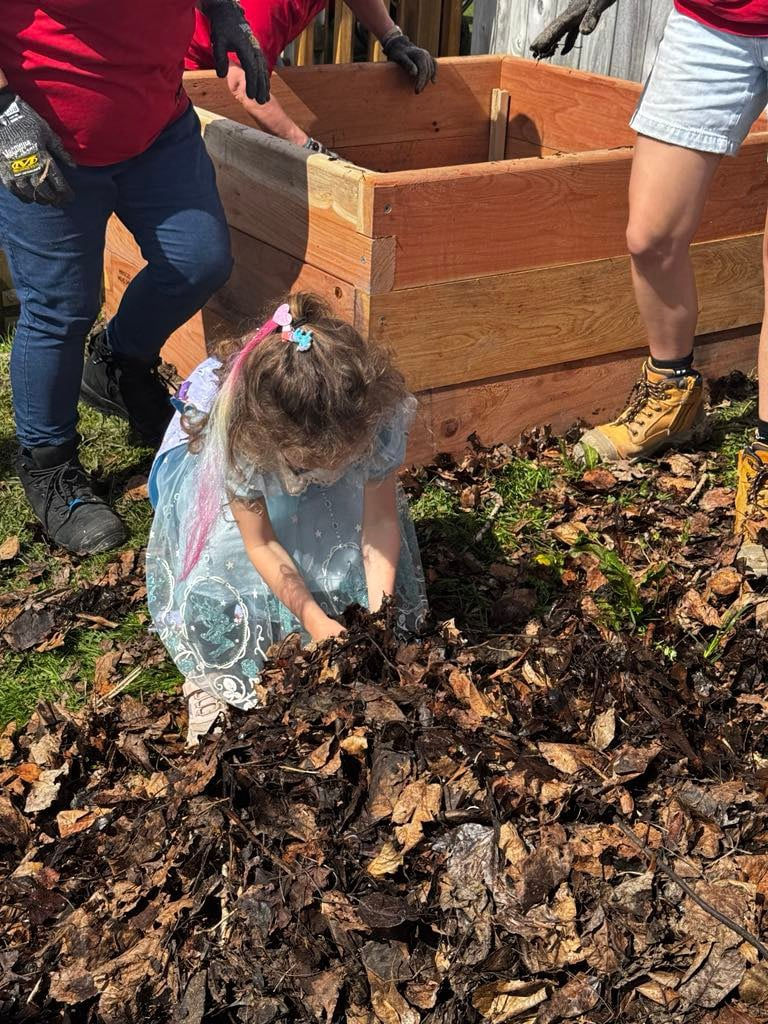
5. Take learning outside
Outdoor play offers children rich sensory experiences that are hard to recreate indoors. They can climb, dig, balance, run, listen, collect, compare, notice weather changes and test their bodies in space.
A short walk can become a science investigation. Look for insects under leaves, compare clouds, notice bird sounds, or talk about why puddles disappear after the sun comes out. In the garden, children can learn patience by planting seeds and checking them over time.
Nature also supports emotional regulation. Many children become calmer and more focused when they have space to move, breathe and explore. This is one reason outdoor learning is such a valuable part of early childhood education. Aubrey’s guide to the benefits of learning outdoors explores how nature based experiences support physical, social and cognitive development.
To extend outdoor learning at home, slow down and notice what your child notices. If they are fascinated by a snail, stay with that interest. Ask, “Where do you think it is going?” or “How does its body move?” Curiosity grows when adults show that children’s discoveries matter.
6. Build independence through small responsibilities
Independence is a major part of early learning. When children learn to do manageable tasks for themselves, they build confidence, persistence, coordination and problem solving skills.
Start with responsibilities that match your child’s age and stage. A toddler might put shoes by the door or carry a small cup to the bench. An older preschooler might help pack their bag, scrape their plate, water plants, or choose clothing for the weather.
Allow extra time where possible. Children often need to repeat a task many times before it becomes easy. If we rush in too quickly, we may accidentally take away the chance to practise.
Useful phrases include “You’re working hard on that zip”, “Try one more time, then I can help”, and “What could we do next?” These phrases focus on effort and strategy, not just success.
If your child is preparing to start care or return after a break, home routines can make the transition feel safer. Practising morning steps, goodbye rituals and packing a bag can all help. For more support, Aubrey’s first day at childcare tips offer practical ways to prepare gently.
7. Follow your child’s interests and share the learning
Children learn deeply when adults notice what captures their attention. A dinosaur phase, a love of trucks, a fascination with babies, or a repeated question about the moon can become a doorway into language, science, art, movement and social learning.
If your child is interested in diggers, you might read books about construction, count wheels, build roads in the sandpit, compare big and small machines, or talk about what workers do to stay safe. If they love animals, you might make animal sounds, visit a local park, draw paw prints, or sort toy animals by where they live.
Following interests does not mean entertaining your child all day. It means paying attention and offering small extensions. “You have been making a lot of towers. I wonder how tall this one can get before it wobbles?”
It can also be helpful to share these interests with your child’s early learning teachers. When home and centre communicate, children experience continuity. Teachers can build on family knowledge, and parents can understand what their child is exploring during the day.
A simple daily rhythm for home learning
If you like structure, think in terms of rhythm rather than a strict timetable. Young children feel secure when they know what usually happens next, but they also need flexibility for rest, emotions and spontaneous play.
A balanced day might include connection, movement, quiet time, outdoor play, practical helping and unhurried conversation. Some days will be messy. Some days will be busy. The goal is not perfection, but regular moments of connection and curiosity.
Try choosing one small focus each day. On Monday, you might notice language during routines. On Tuesday, you might make time for outdoor exploring. On Wednesday, you might invite your child to help with cooking. Over a week, these little moments add up.
Frequently Asked Questions
How much time should I spend on early learning at home each day? You do not need long lessons. Short, warm interactions throughout the day are often more useful for young children than formal teaching sessions. Talking, reading, playing outside and involving your child in routines all count.
Do I need special toys or apps for early learning at home? No. Everyday objects, nature, books, music, pretend play and household routines offer plenty of learning opportunities. Simple, open ended materials often encourage more creativity than toys with one fixed purpose.
What if my child does not want to join in? Follow their cues. Young children learn best when they feel safe and interested. If an activity is not working, pause, simplify it, move outside, or return to it another day. Play should not feel like pressure.
How can I support school readiness at home? Focus on independence, communication, emotional regulation, listening, curiosity and confidence. Practical skills like managing shoes, opening a lunchbox, asking for help and taking turns are just as important as early letters and numbers.
How can home learning connect with childcare? Share your child’s interests, new words, family events and questions with their teachers. Ask what your child has been exploring at the centre, then continue the conversation at home through play, books or outdoor experiences.
Bringing home and centre learning together
Early learning at home works best when it feels natural, playful and connected to your child’s real life. You do not need to do everything. Start with one routine, one story, one outdoor moment, or one conversation, then build from there.
At Aubrey Early Learning Centre, children learn through play in a nurturing rural setting near Stillwater, with qualified early childhood teachers, age specific spaces and outdoor nature based experiences. If your family is exploring childcare options, you can get in touch to ask about enrolment, visits and support such as 20 Hours ECE.


Comments